




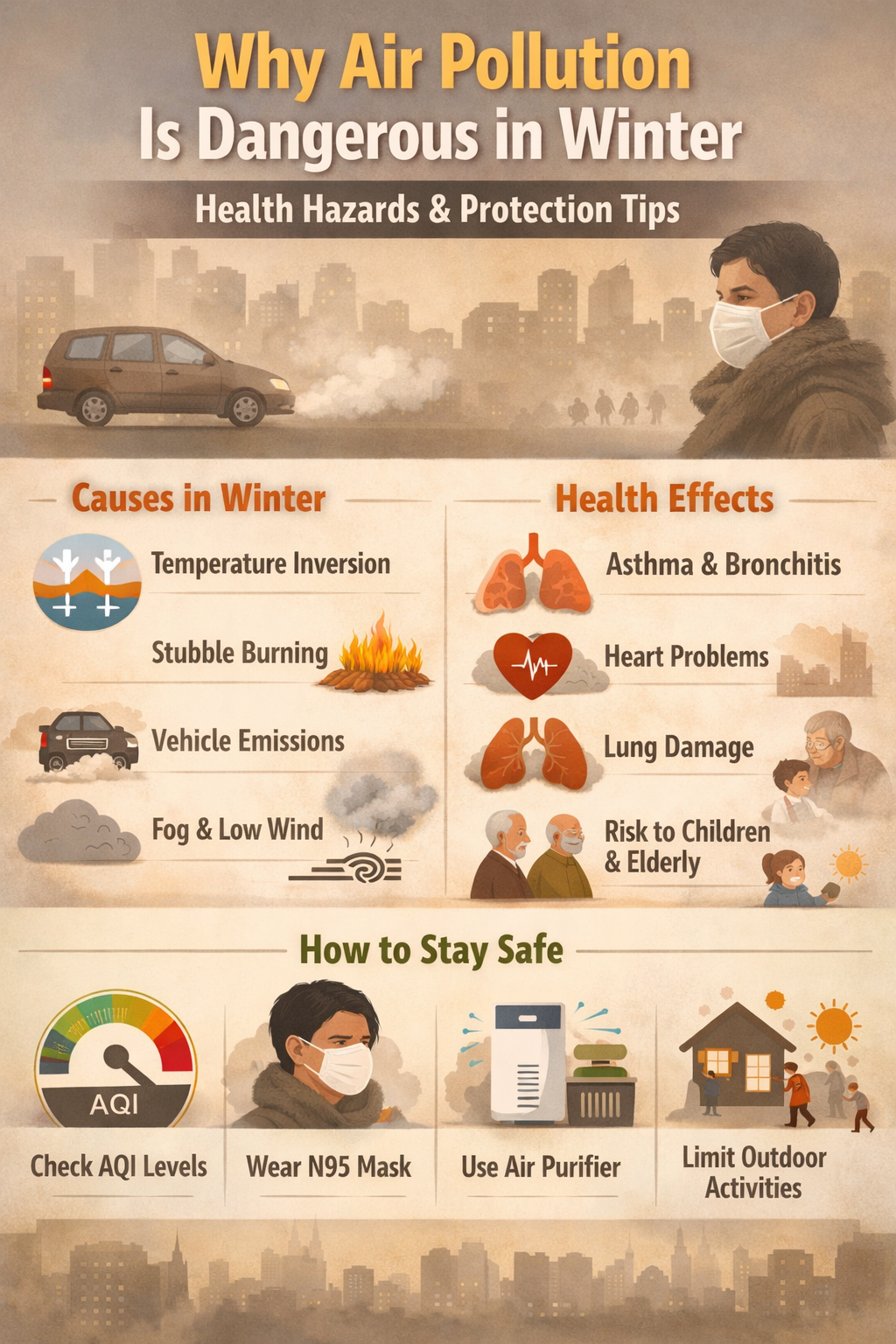
Why Air Pollution Is Dangerous in Winter: Health Hazards & Ways to Stay Safe
Air pollution becomes more dangerous during winter, especially in India. Cities like Delhi, Gurugram, Noida, and other urban areas experience heavy smog, leading to serious health risks. Understanding why air pollution worsens in winter, its health hazards, and how to protect yourself is essential for good health.
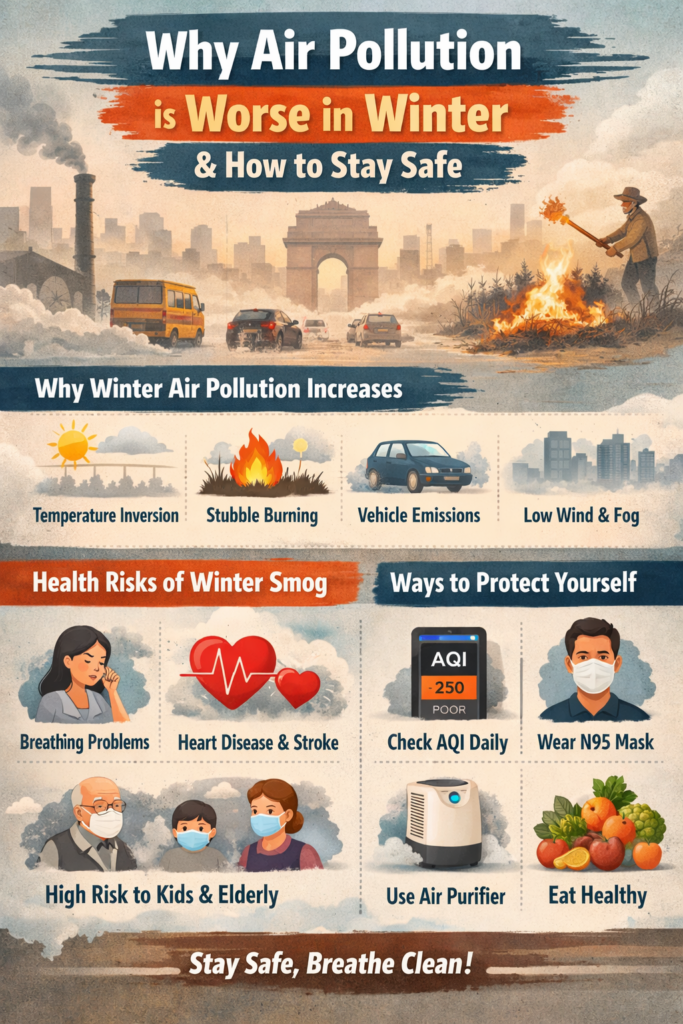
Why Air Pollution Increases in Winter
1. Temperature Inversion
During winter, cold air remains trapped near the ground while warmer air stays above it. This phenomenon, called temperature inversion, prevents pollutants from dispersing and causes them to accumulate at breathing level.
2. Low Wind Speed and Fog
Calm winds and dense fog reduce air circulation in winter. Pollutants like PM2.5, PM10, and nitrogen dioxide remain suspended in the air for longer periods.
3. Increased Burning Activities
- Stubble burning in agricultural regions
- Burning of wood, coal, and biomass for heating
- Firecrackers during festivals
4. Rise in Vehicle Emissions
Cold engines release more pollutants, and traffic congestion during winter mornings and evenings further worsens air quality.
Health Hazards of Winter Air Pollution
Short-Term Health Effects
- Eye, nose, and throat irritation
- Coughing and wheezing
- Shortness of breath
- Headaches and fatigue
Long-Term Health Risks
- Asthma and chronic bronchitis
- Reduced lung capacity
- Heart diseases and stroke
- Increased risk of lung cancer
High-Risk Groups
- Children
- Elderly people
- Pregnant women
- People with respiratory or heart conditions
Most Harmful Pollutants
- PM2.5: Tiny particles that enter lungs and bloodstream
- PM10: Causes respiratory irritation
- Nitrogen Dioxide (NO₂): Damages lung tissues
- Carbon Monoxide (CO): Reduces oxygen supply in the body
Ways to Protect Yourself from Air Pollution in Winter
1. Monitor Air Quality Index (AQI)
Check daily AQI levels and avoid outdoor activities when air quality is poor or severe.
2. Wear Protective Masks
Use N95 or KN95 masks when stepping outside to reduce inhalation of harmful particles.
3. Avoid Peak Pollution Hours
Early mornings and late evenings usually have higher pollution levels during winter.
4. Improve Indoor Air Quality
- Keep windows closed during high pollution
- Use air purifiers if available
- Avoid smoking or burning incense indoors
5. Eat a Healthy Diet
- Consume fruits and vegetables rich in antioxidants
- Increase intake of Vitamin C and Vitamin E
- Drink plenty of water
6. Protect Children and Elderly
Limit outdoor exposure and ensure regular health check-ups.
7. Reduce Pollution at Source
- Use public transport or carpool
- Avoid burning waste
- Support eco-friendly practices
Conclusion
Winter air pollution is a serious public health concern in India. Awareness, preventive measures, and responsible behavior can significantly reduce health risks. Clean air is essential for a healthy life, and collective action is the key to a pollution-free future.